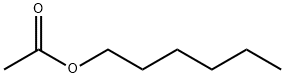
PRODUCT Properties
| Boiling point: | 121 °C20 mm Hg(lit.) |
| Density | 0.915 g/mL at 25 °C(lit.) |
| vapor pressure | 5.03-7.45Pa at 20-25℃ |
| refractive index | n |
| FEMA | 2726 | METHYL 2-NONYNOATE |
| Flash point: | 213 °F |
| storage temp. | 2-8°C |
| form | clear liquid |
| color | Colorless to Light yellow |
| Odor | at 1.00 % in dipropylene glycol. floral green violet leaf melon cucumber |
| Odor Type | green |
| biological source | synthetic |
| JECFA Number | 1356 |
| BRN | 1759870 |
| Major Application | flavors and fragrances |
| Cosmetics Ingredients Functions | PERFUMING |
| InChI | 1S/C10H16O2/c1-3-4-5-6-7-8-9-10(11)12-2/h3-7H2,1-2H3 |
| InChIKey | NTLJTUMJJWVCTL-UHFFFAOYSA-N |
| SMILES | CCCCCCC#CC(=O)OC |
| LogP | 3.4 at 20℃ and pH7 |
| CAS DataBase Reference | 111-80-8(CAS DataBase Reference) |
| EPA Substance Registry System | 2-Nonynoic acid, methyl ester (111-80-8) |
Description and Uses
Methyl 2-nonynoate has a characteristic violet-like odor with a sweet taste reminiscent of fresh peach, unripe banana, and cucumber peel. May be prepared from 2-octene by way of 1-octyne and octyne carboxylic acid.
METHYL 2-NONYNOATE is used as ester-based synthetic flavorings, as specified in GB 2760-1996, are permitted food flavorings, primarily used in the formulation of flavorings such as green banana, cucumber, peach, lychee, longan, and melon. They possess a green floral aroma and can be combined with other flavorings in flavorings such as gardenia, tuberose, violet, osmanthus, and rose. They are also used in acacia compound, orchid, and other formulations containing ionones to enhance aroma and provide top notes. In trace amounts, they are used in food flavorings to imitate the aromas of peach, banana, lychee, longan, cucumber, melon, currant, and berry flavors.
Safety
| Symbol(GHS) |  GHS07 |
| Signal word | Warning |
| Hazard statements | H303-H317-H302 |
| Precautionary statements | P262-P280g |
| PPE | Eyeshields, Gloves |
| Hazard Codes | Xn |
| Risk Statements | 36/37/38-22-36/38 |
| Safety Statements | 26-36/37/39-37/39 |
| WGK Germany | 2 |
| RTECS | RB3450000 |
| TSCA | TSCA listed |
| HS Code | 29161900 |
| Storage Class | 10 - Combustible liquids |
| Hazard Classifications | Acute Tox. 4 Oral |
| Toxicity | The acute oral LD50 in rats was reported as 2.22 g/kg (1.79-2.65 g/kg) (Moreno, 1973) and the acute dermal LD50 in rabbits as less than 5 g/kg (Moreno, 1973) |
| REACH Registrations | Active |